When Posting Less Is the Right Move
Sometimes the best growth move is posting less. Learn the signs you're over-posting, how to set a real quality bar, and where to reinvest the time you free up.
Every piece of social media advice eventually collapses into one word: more. Post more. Show up daily. Feed the algorithm. And for accounts posting once a month, "more" is genuinely the right call.
But there is a ceiling, and plenty of creators are past it. They are shipping daily posts that even they would not stop scrolling for, burning weekends to feed a queue, and watching their numbers stay flat or sag anyway. For them, the highest-leverage move available is the one nobody recommends: post less, and make each post count for more.
This is the case for fewer, better posts — how to know if it applies to you, and what to do with the hours you get back.
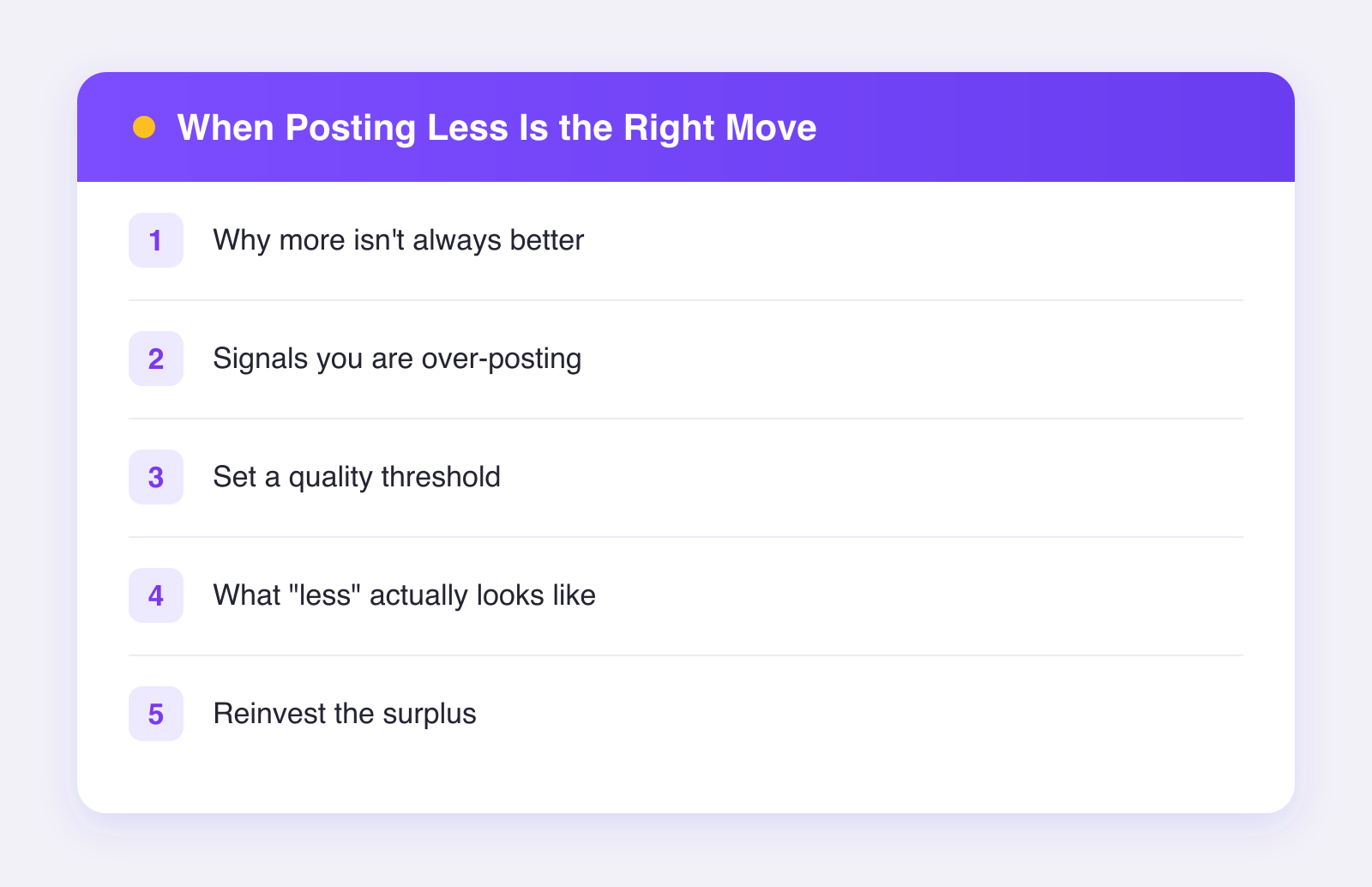
Why more isn't always better
Distribution on every major platform is earned per post. Each post's early engagement — do the first viewers watch, save, share, skip? — decides how far it travels. That mechanic has a hard implication: a filler post is not neutral. It performs badly, teaches the platform your content is skippable, and occupies a slot in your audience's limited attention that a better post could have used.
Your audience feels it too. People follow you for a certain hit rate. When the great posts get diluted by shrug posts, the perceived value of following you drops, and so does the reflex to stop when they see your name.
And you feel it most of all. Quality is a function of time and attention. The same creator, given three days per post instead of one, makes noticeably better work. Volume eats exactly the resource quality needs.
Signals you are over-posting
No universal number defines "too much" — the right cadence depends on your format and your capacity, which we cover in how often to post on social media. But over-posting has telltale signs:
- Your per-post engagement is falling while your output holds steady or rises. More posts, thinner results each.
- You cannot name the point of yesterday's post. If posts exist only to maintain a streak, they are filler by definition.
- Your best posts and worst posts feel like different accounts made them. A wide quality spread means your calendar, not your standards, is deciding what ships.
- You feel relief when a scheduled post fails to go out. Your own dread is data.
- Engagement clusters on a fraction of posts. Scan your last 30: if a small handful earned nearly all the saves and shares, the rest were mostly practice — expensive practice.
Two or more of these, and the experiment below is worth running.
Set a quality threshold
"Post better stuff" is useless advice without a bar. Make the bar explicit. Before anything ships, it must clear questions like:
- Would I save or share this if someone else posted it? Not like — save or share.
- Does it do one clear job? Teach one thing, tell one story, make one argument. Posts that do a little of everything do nothing.
- Is the first line strong enough to interrupt a scroll? If the hook is weak, the rest is unread anyway — fix the hook or cut the post.
- Would I be comfortable if this were the first post a future customer saw? Every post is somebody's first impression.
Anything that fails goes back in the drafts folder — not deleted, matured. Half of your "not good enough" drafts become good posts later, when you find the missing angle.
What "less" actually looks like
Posting less does not mean posting rarely, and it absolutely does not mean posting erratically. Consistency and volume are different dials. Keep the rhythm predictable; lower the frequency. If you post daily now, try four a week for a month, holding your quality bar. Judge the experiment on totals, not per-post vanity: total reach, total saves and shares, total follower change for the month. Fewer, stronger posts routinely match or beat the old totals — while costing you dramatically less.
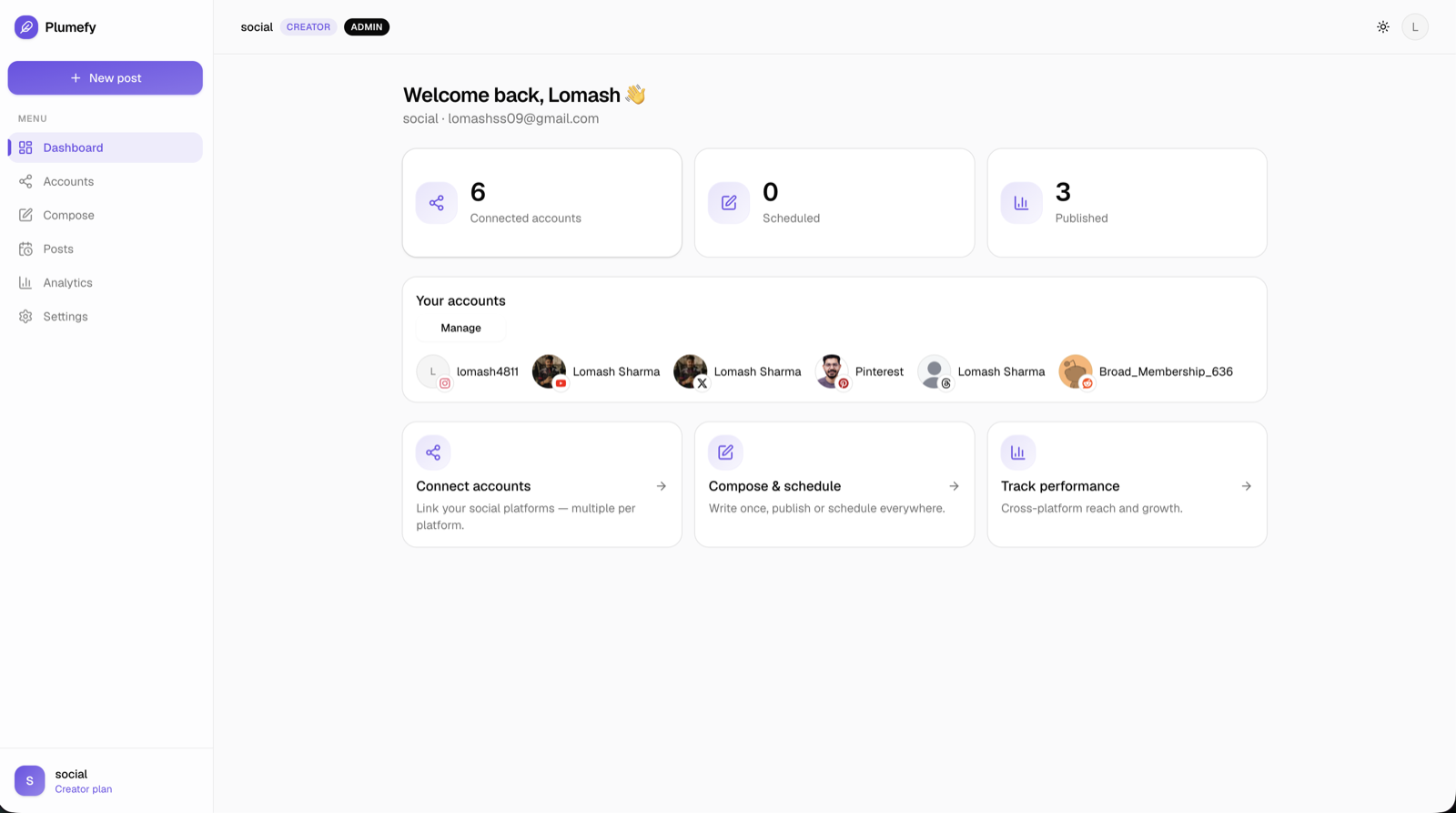
Scheduling makes the discipline stick. When your month's posts are queued in advance, the daily "should I whip something up?" temptation disappears. Plumefy lets you schedule and cross-post to up to 11 networks in one sitting, and its combined analytics dashboard gives you the per-account totals you need to judge the experiment honestly. The free plan is enough to run the trial — try Plumefy free.
Reinvest the surplus
The hours you reclaim are the whole prize. Spend them where compounding lives:
- Depth on the posts that remain. Better hooks, tighter edits, real examples. The gap between a decent post and a great one is usually one more revision.
- Replying. Conversations in your comments and DMs convert casual followers into real ones, and they cost only time — the thing you just freed.
- Evergreen assets. A how-to that stays relevant for a year outworks thirty timely posts that die in a day. Shift your mix toward durable material; our evergreen vs trending guide covers the balance.
- Repurposing your winners. Your best post deserves a second life as a different format on a different network more than your calendar deserves a brand-new mediocre post.
FAQ
Won't the algorithm punish me for posting less?
Platforms reward per-post engagement more than raw output. A schedule of consistent, well-received posts generally outperforms a firehose of skipped ones. What does hurt is vanishing entirely — reduce frequency, keep the rhythm.
How do I explain posting less to a client?
With totals. Propose a one-month experiment and report total reach, engagement, and follower change against the previous month. Clients buy outcomes, not post counts — show the outcomes held or improved at lower cost.
What if my niche genuinely rewards volume?
Some formats — news, memes, commentary — do lean on frequency. Even there, the quality bar applies; it just filters faster. Run the experiment before assuming your niche is the exception.
How long before I know if posting less worked?
Give it a full month, ideally two. Week-one numbers wobble for reasons that have nothing to do with you. Compare monthly totals and medians, then decide with data instead of guilt.
Post everywhere, once.
Start on the free plan — no card needed, upgrade when you need scheduling.
Start free