Your First 30 Days of Social Media: A Plan for New Brands
A day-by-day 30-day social media plan for a brand starting from zero: a setup week, content pillars, a cadence ramp, and a month-end review you can repeat.
Starting a brand account from zero is intimidating. No followers, no content library, no proof that any of this will work. Just a blank feed staring back at you.
Here is the good news: the first 30 days are not about going viral. They are about building a system you can still run in month two, month six, and month twenty. Small, boring, repeatable wins beat one lucky post every time.
This plan walks you through your first month, day by day. Follow it loosely. If you slip a day, shift everything forward and keep going. The plan survives contact with real life.
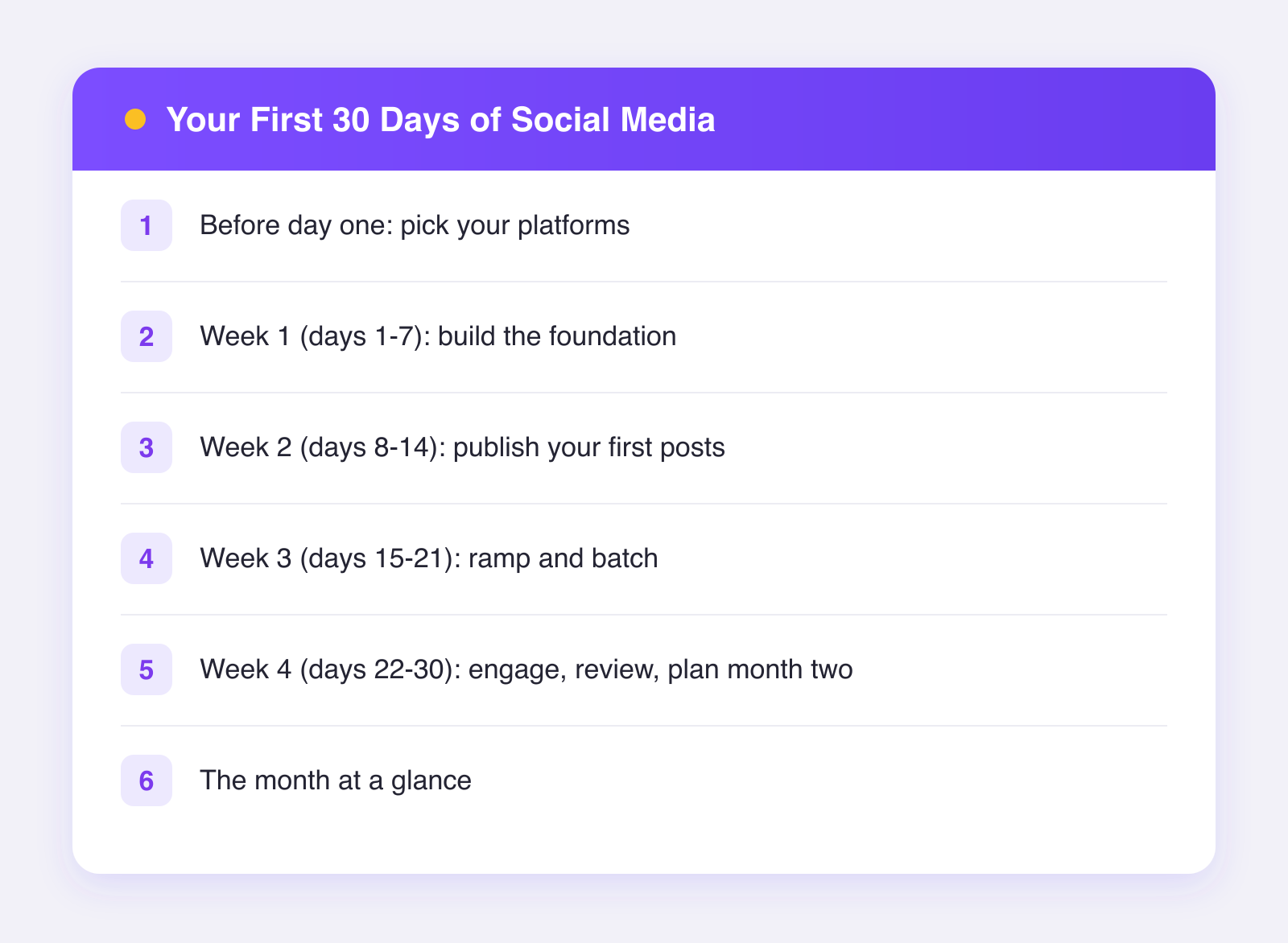
Before day one: pick your platforms
Do not start on six networks. Pick two or three where your audience actually spends time.
- B2B or professional services: LinkedIn, plus one visual platform for reach.
- Visual or physical products: Instagram and TikTok, maybe Pinterest.
- Local businesses: Instagram and Facebook, where local discovery still happens.
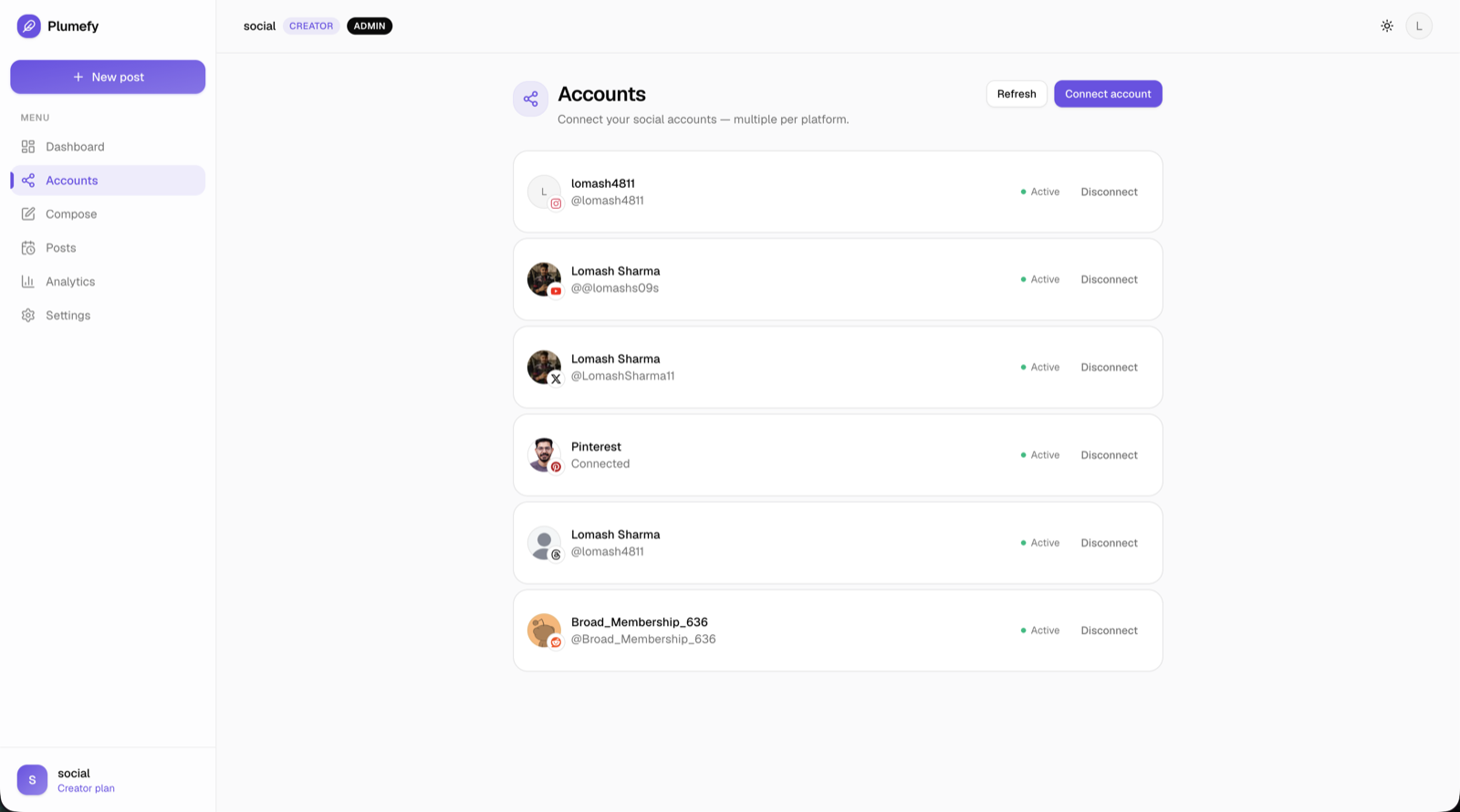
Starting small costs you nothing later. A tool like Plumefy can cross-post to 11 networks when you are ready to expand, so your system scales without a rebuild.
Week 1 (days 1-7): build the foundation
Days 1-2: claim and complete your profiles. Grab the same handle everywhere you can, even on platforms you will not use yet. Write a bio that says what you do and who it is for. Add a clear profile photo and a link.
Day 3: write your one-line positioning. Finish this sentence: "We help [who] do [what] without [pain]." Every post you write this month should trace back to it.
Day 4: choose three content pillars. Pillars are the recurring themes you post about. A simple starter set: answer your audience's questions, show your work, and share your point of view. Keep the list short so it actually guides you.
Day 5: set your starting cadence. Three posts a week per platform is plenty for month one. Consistency matters more than volume. If you want help picking days and times, our guide to a realistic posting schedule covers it.
Days 6-7: set up your tools. Connect your accounts to a scheduler, build a simple content calendar, and create a notes doc for ideas. Plumefy's free plan covers 2 accounts and 10 posts, which is exactly enough to run this first month without paying anything.
Week 2 (days 8-14): publish your first posts
This week you ship. Do not wait for perfect.
Days 8-9: write six posts. Two per pillar. Keep them simple: one clear idea per post, written the way you talk.
Day 10: schedule the batch. Spread the six posts across two weeks. Scheduling ahead removes the daily "what do I post today" panic.
Days 11-12: introduce yourself. Post a founder or brand introduction. Who you are, why you started, what people can expect from following you. These posts almost always outperform expectations because people connect with people.
Days 13-14: engage before you expect engagement. Follow relevant accounts, leave ten thoughtful comments a day, and reply to anyone who interacts with you. Early on, conversations grow accounts faster than posts do.
Week 3 (days 15-21): ramp and batch
By now you know roughly how long a post takes you. Use that.
Day 15: review your first data. Which posts got saves, shares, or replies? Do not overread tiny numbers. Just note what felt easy to make and what got any response.
Days 16-17: batch two weeks of content. Set aside one focused block and write eight to ten posts in a sitting. Batching is the single biggest workflow upgrade for small teams.
Day 18: raise your cadence slightly. If three posts a week felt easy, go to four. If it felt hard, stay at three. The ramp should never break the habit.
Days 19-21: try one new format. A short video, a carousel, a poll. One experiment per week keeps you learning without derailing the system.
Week 4 (days 22-30): engage, review, plan month two
Days 22-26: keep shipping and double down on replies. Treat every comment as the start of a conversation. Ask questions back.
Day 27: run your month-end review. Thirty minutes, three questions: What got the most engagement? What was easiest to produce? What will you stop doing?
Days 28-29: plan month two. Keep the pillars that worked, replace the one that did not, and build next month's calendar. A reusable content calendar template makes this a fill-in-the-blanks exercise.
Day 30: celebrate. Seriously. Most brand accounts quietly die in the first month. Yours now has a rhythm, a small content library, and real data.
The month at a glance
| Week | Focus | What you ship |
|---|---|---|
| 1 | Setup and strategy | Profiles, positioning, pillars, cadence |
| 2 | First posts | 6-8 posts plus an introduction |
| 3 | Ramp and batch | Two-week batch, one format experiment |
| 4 | Review and plan | Month-end review, month-two calendar |
FAQ
What if I miss a day?
Shift everything forward and keep going. The plan is a rhythm, not a contract. Missing a day costs you nothing; quitting because you missed a day costs you the whole system.
Should I post the same content on every platform?
Mostly yes, with light tweaks per platform. In month one, reach and consistency beat per-platform perfection. Cross-posting from one place, then adjusting captions where it matters, is the practical middle ground. Plumefy lets you customize each version before it goes out, and you can try Plumefy free for exactly this.
How many followers should I expect after 30 days?
There is no honest universal number, and anyone who gives you one is guessing. Judge month one by consistency and engagement quality, not follower count. The compounding starts later.
When should I add a third or fourth platform?
When your current platforms run on habit instead of willpower. If batching and scheduling feel routine, adding a network is cheap. If you are still scrambling weekly, expanding will just spread the scramble.
Post everywhere, once.
Start on the free plan — no card needed, upgrade when you need scheduling.
Start free